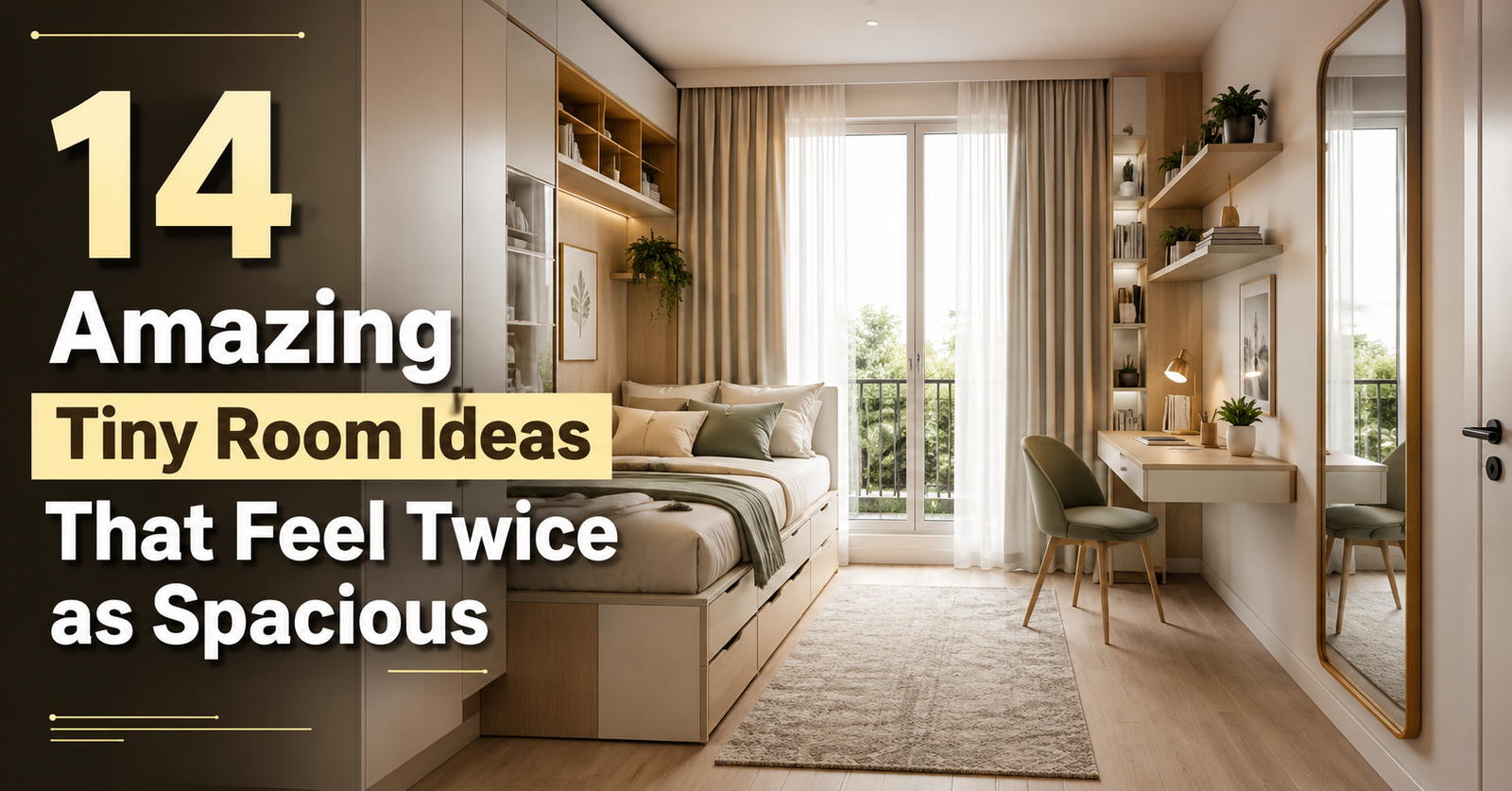
These notes are for rooms about 10×12 ft (3.0×3.7 m) or smaller — studio corners, guest rooms, and single bedrooms where a standard 84-in sofa already eats the plan. “Twice as spacious” is a lighting and circulation trick, not extra square footage. What actually works: showing more floor, keeping walkways, and limiting bulky silhouettes. What does not: mirrored everything, tiny “dollhouse” furniture you cannot sit on, and five storage units that turn the room into an aisle.
Measure the room, door swing, and radiator or AC unit before you buy. Tape footprints on the floor. Costs use ~280 PKR per USD.
1. Choose Wall-Mounted Furniture
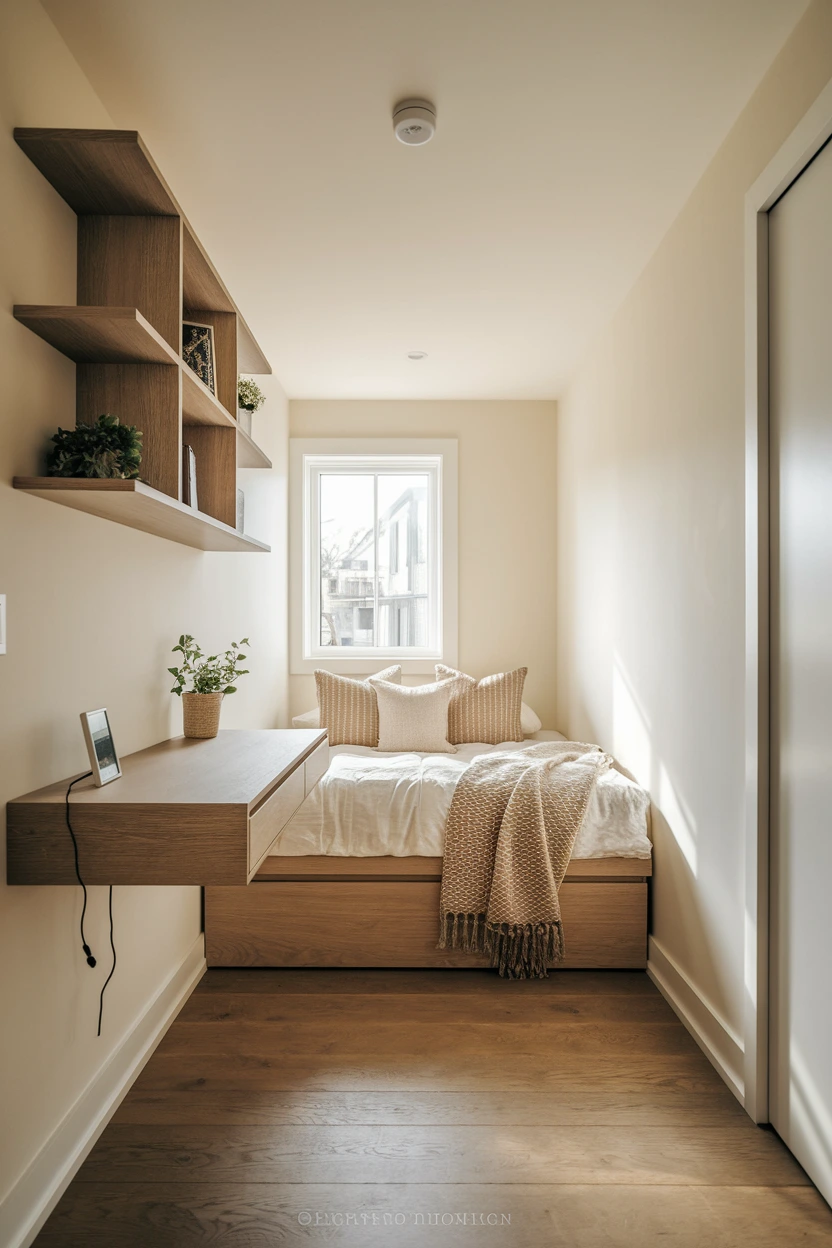
A floating nightstand or desk leaves floor visible, which reads as more space. A 16–20 in deep wall desk is $40–$180 (~PKR 11,000–50,000); a pair of floating cubbies used as nightstands is $30–$90. Time: 1–3 hours plus finding studs. Skill: drill and a level; hire a handyman if walls are concrete or you are hanging more than 25 lb without a stud.
Common mistake: a 24-in-deep “floating” desk in a 8-ft-wide room that then has no chair clearance. Spec: desk height 28–30 in (71–76 cm); leave 24 in of knee space; nightstand top 2–4 in below the mattress top. This is a real trick. A wall-mounted TV on a huge console is not — you just moved the bulk lower.
2. Use a Light and Airy Color Palette
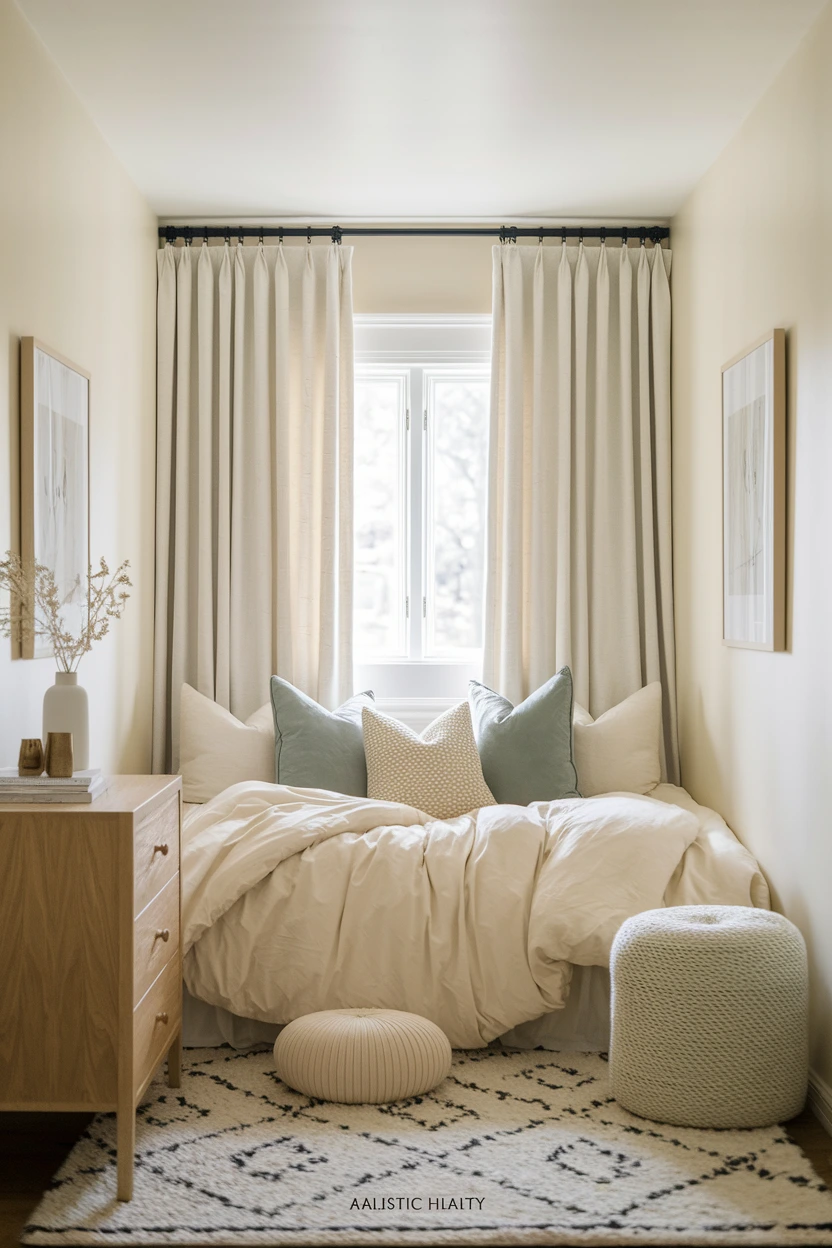
Light walls bounce whatever daylight you have. One gallon of paint is $30–$55 (~PKR 8,400–15,400). Time: a day. Paint the ceiling the same light value as the walls in a 8-ft room so the lid does not drop. This works. Painting one wall black in a 9×10 ft bedroom as a “feature” usually shrinks it.
DIY. Common mistake: cool blue-white on a north window that then needs 5000K bulbs to look livable. Spec: LRV 70+ on walls if the room is dim; keep large furniture within two steps of the wall color. Limit the palette to two neutrals plus one accent used on textiles you can swap.
3. Invest in a Multifunctional Storage Bed
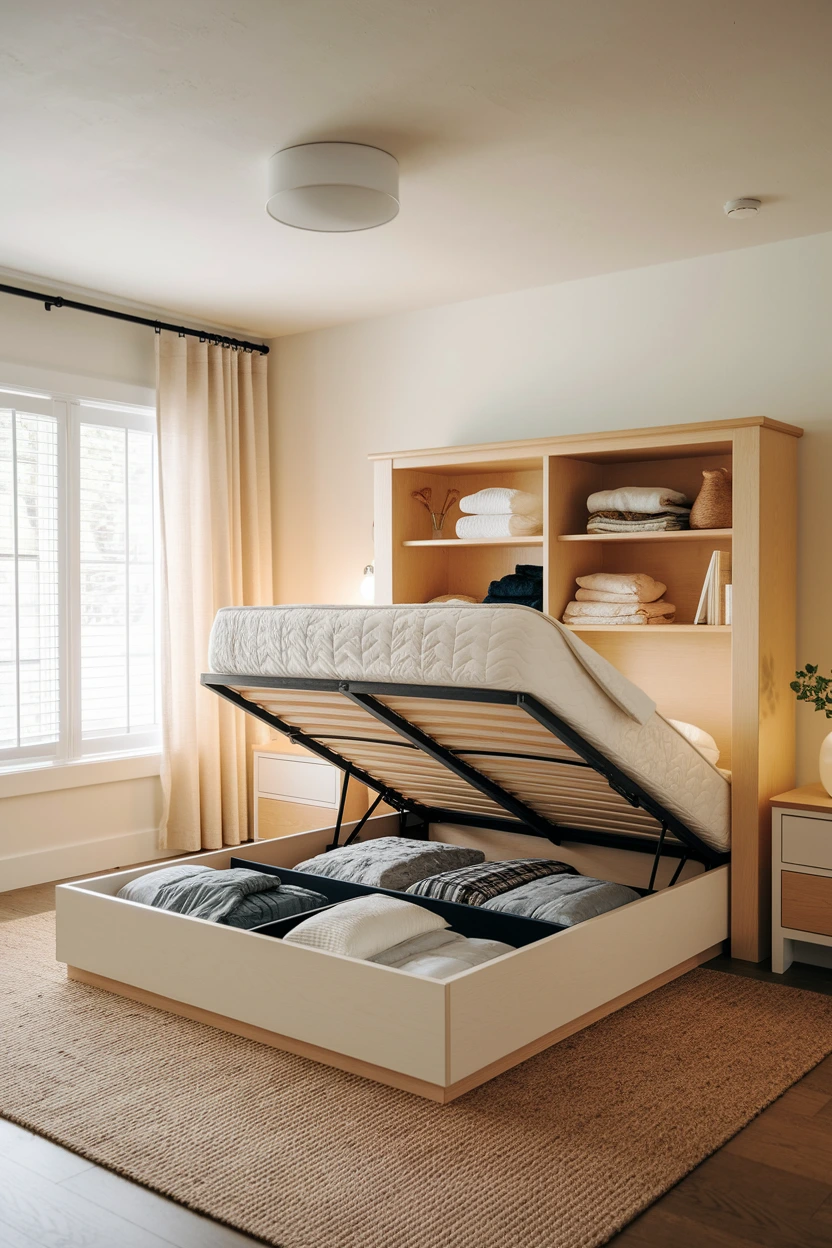
In a tiny bedroom the bed is the storage budget. A queen storage bed (drawers or lift) is $350–$1,200 (~PKR 98,000–336,000). A metal frame plus under-bed boxes is $80–$200 if the budget is tight. Time: 2–4 hours assembly. Skill: two people for a lift-up base.
DIY assembly. Skip custom joinery. Common mistake: drawer beds that need 36 in of side clearance in a room that only has 22 in to the wall. Spec: a queen is 60×80 in (152×203 cm); leave 24 in on the main get-out side and 18 in on the other if you must. Lift-up bases win when walls are tight. Platform beds with no storage waste the largest footprint in the room.
4. Make the Room Feel Larger With Mirrors
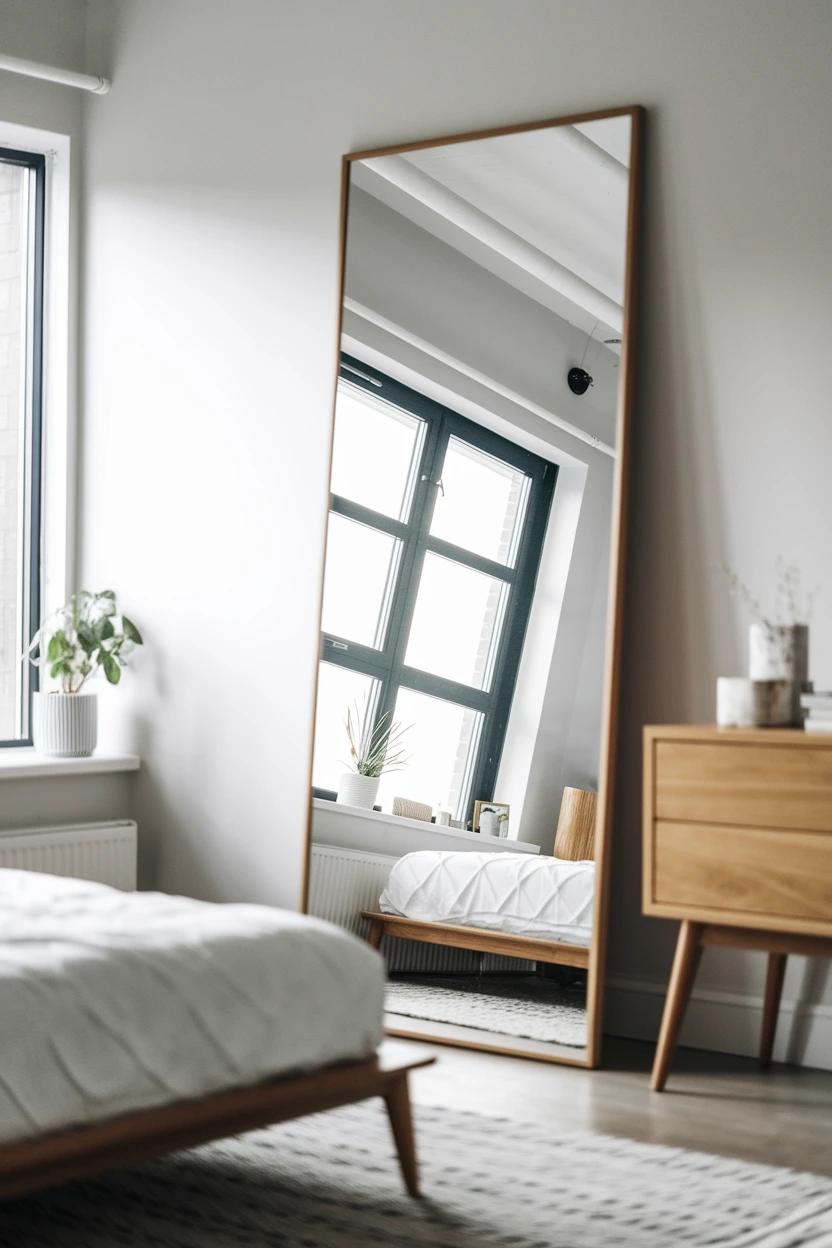
One large mirror opposite or beside a window bounces light. A 24×36 in framed mirror is $30–$120 (~PKR 8,400–34,000); a door-mounted full length is $20–$60. Time: 30–60 minutes. This works if it reflects a window or a clear wall. It fails if it reflects a pile of laundry or a cluttered desk — you just doubled the mess.
DIY with proper anchors. Common mistake: a grid of six small mirrors that reads as tile, not depth. Spec: one piece, at least 36 in on the long side; hang the center at about 57–60 in from the floor. Mirrored closet doors help in a 10-ft room; mirrored furniture on every surface is a gimmick and a fingerprint job.
5. Take Storage All the Way Up the Wall
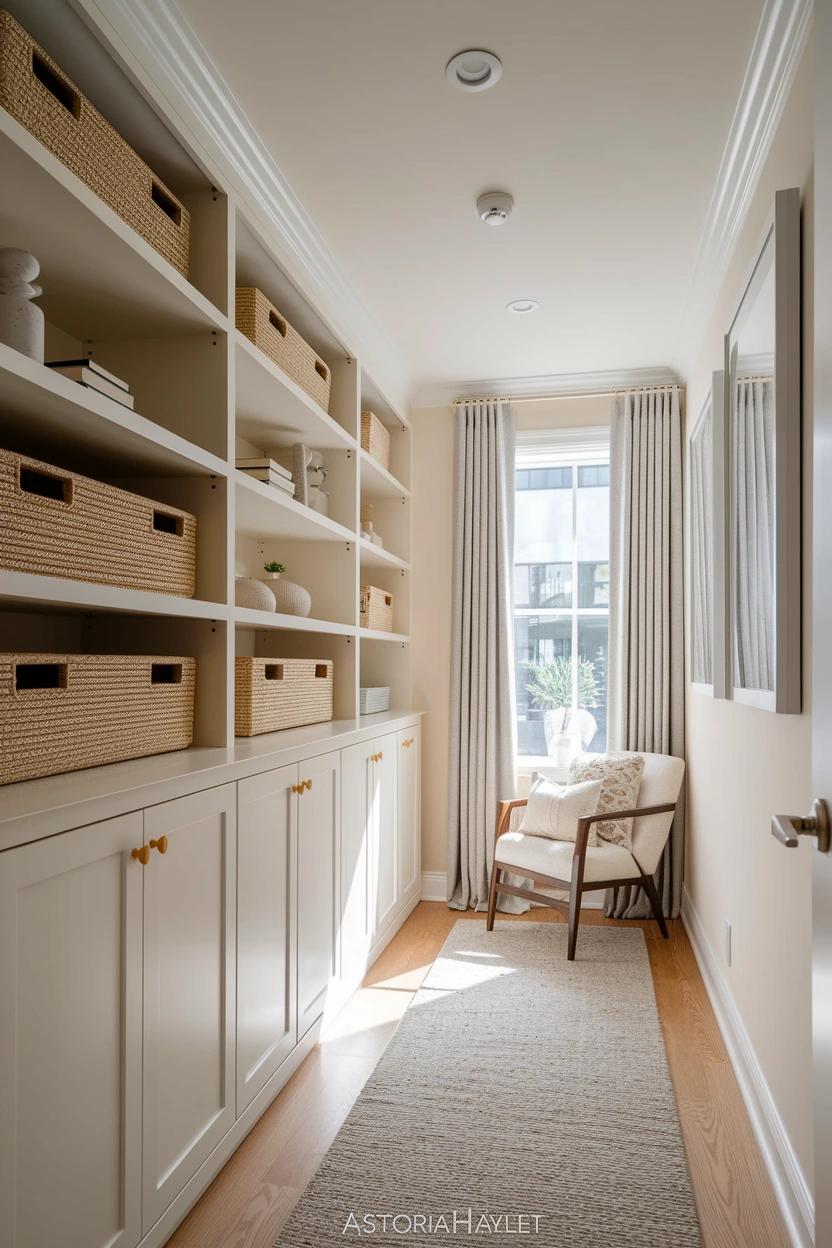
A 12-in-deep, 80-in-tall bookcase uses wall, not floor. Cost: $80–$250 (~PKR 22,000–70,000) for a ready-made unit. Time: 1–2 hours. Skill: must be anchored — this is safety, not style.
DIY with anti-tip hardware into studs. Hire a carpenter for built-ins around a window ($400–$1,500). Common mistake: 16-in-deep cabinets in a 36-in-wide leftover strip so the door hits the bed. Spec: 10–12 in depth for books and bins; everyday items between 24 and 60 in off the floor; seasonal boxes up high with a small stool. Floor-to-ceiling works. A “ladder shelf” that leans and is not fixed is a fall waiting.
6. Add Slim Floating Shelves
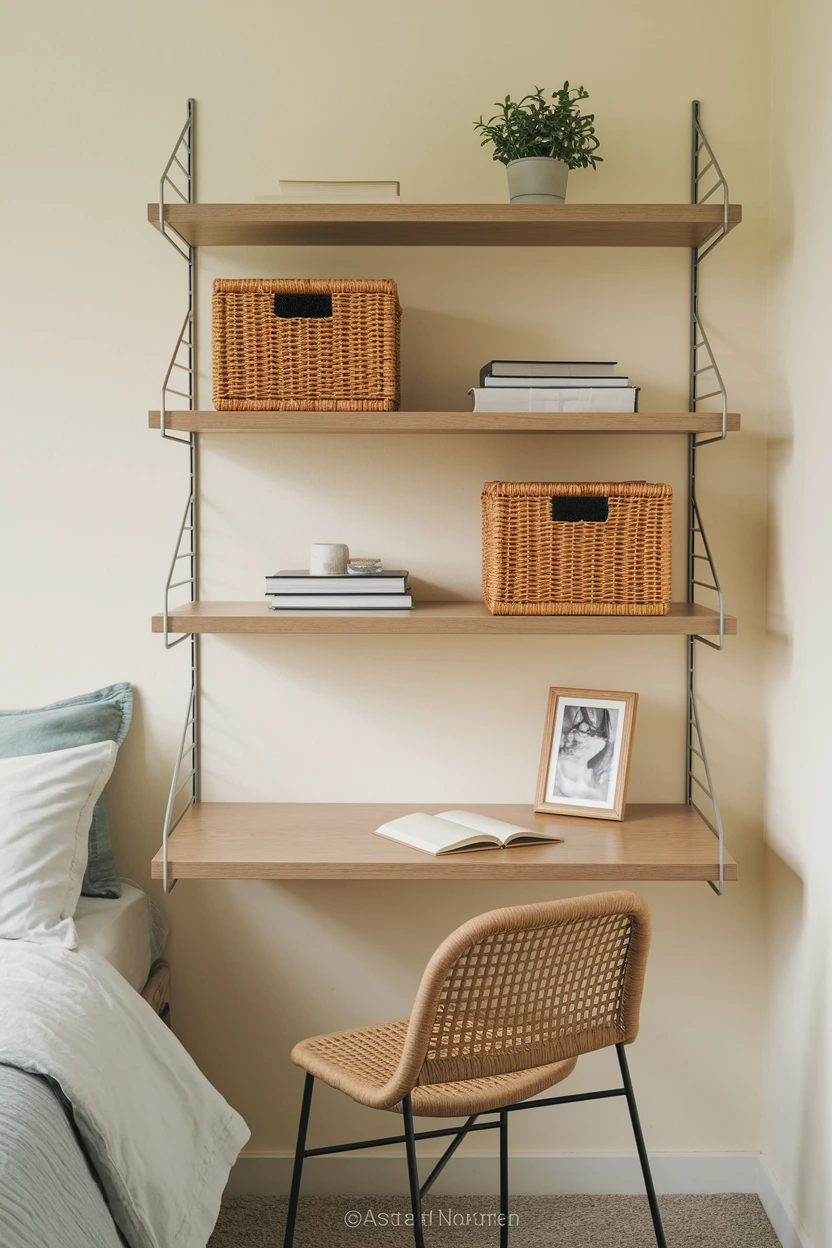
Shelves 6–8 in deep hold books without eating a walkway. A pair is $25–$80 (~PKR 7,000–22,000). Time: 1 hour. They work as a nightstand alternative. They fail as the only kitchen for a studio if you overload them.
DIY into studs or use rated hollow-wall anchors. Common mistake: 12-in shelves over a bed that you hit sitting up. Spec: 8 in maximum depth over a sleeping zone; 18–24 in above the mattress; weight rating on the bracket, not the wood. Staggered “Pinterest” shelves with 40 objects are visual noise in under 120 sq ft.
7. Turn an Empty Corner Into a Workspace
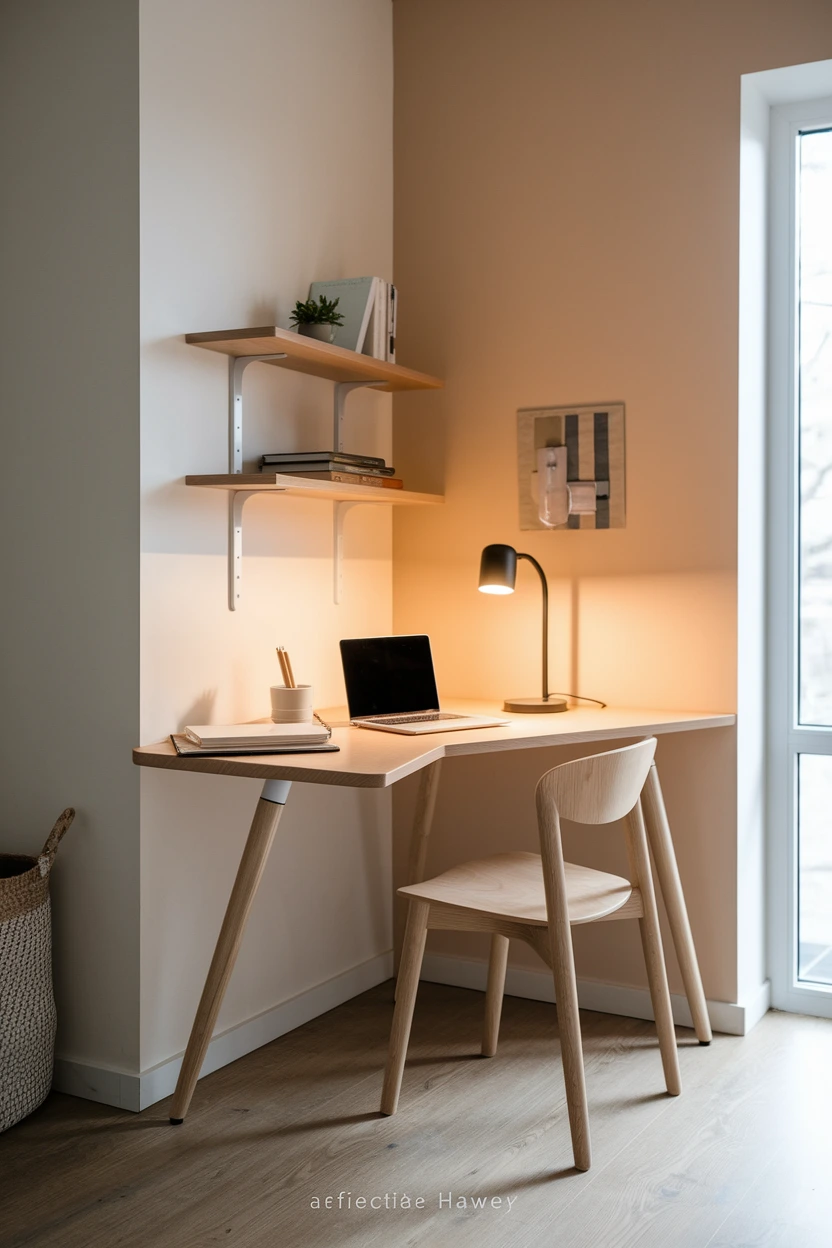
A corner desk 36–42 in on each leg, 18–20 in deep, fits a laptop without a full office. Cost: $60–$200 (~PKR 17,000–56,000) plus a chair that tucks ($40–$150). Time: an evening. This works in a bedroom if you can shut work away. A 60-in executive desk in a 10×11 ft room does not.
DIY. Common mistake: facing a blank corner with no task light, then blaming the room. Spec: 30 in of clear width for the chair; monitor arm if you add a screen so the desk can stay 20 in deep. Skip the “office chair throne” with a 28-in turning radius.
8. Use Ottomans With Hidden Storage
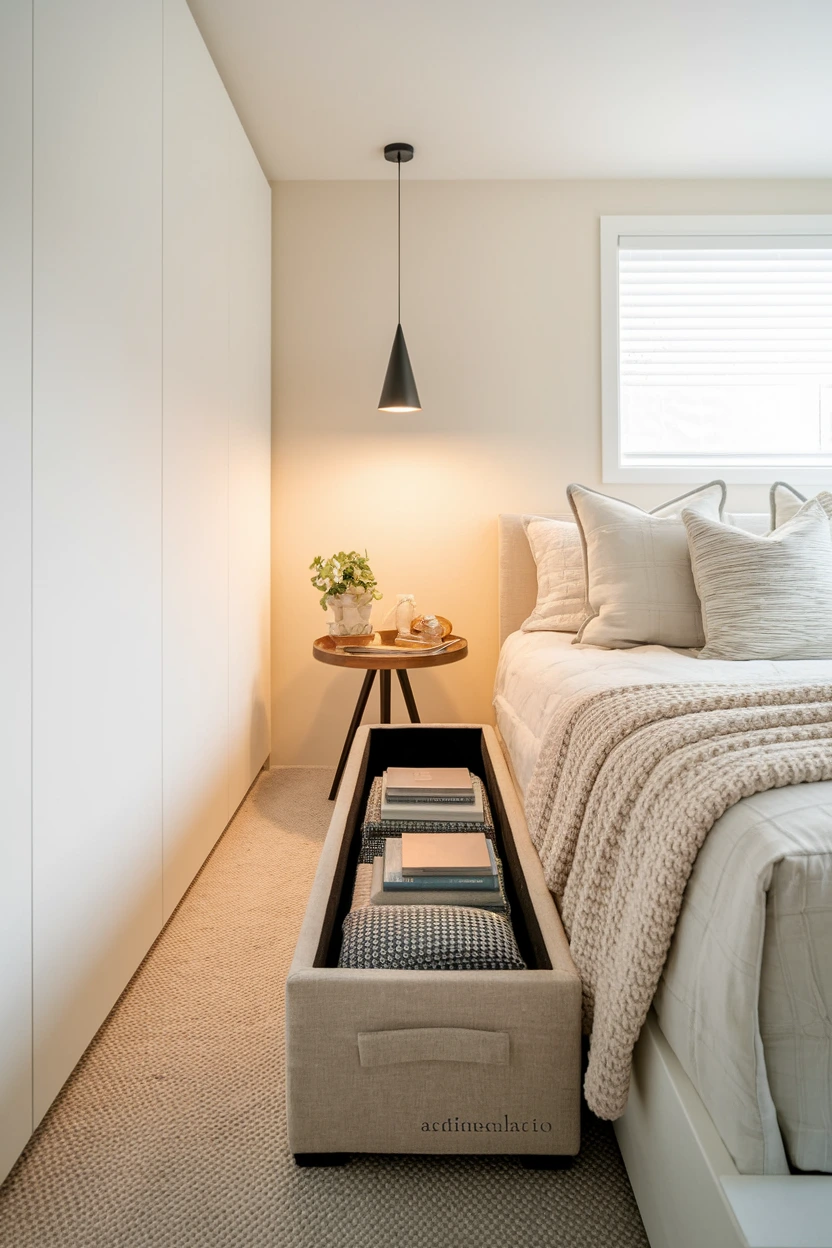
A 18–20 in cube ottoman is seat, table (with a tray), and linen bin. Cost: $35–$120 (~PKR 10,000–34,000). Time: unbox. This works at the foot of a twin or as the only coffee table in a studio. Two oversized benches in a 9×10 ft room is clutter with lids.
DIY. Common mistake: a lid that needs 24 in of overhead clearance next to a low window sill. Spec: footprint no larger than 20×20 in unless it is a window bench replacing a chest. Firm top if you will set a laptop; soft top if it is only feet.
9. Hang Curtains High and Wide
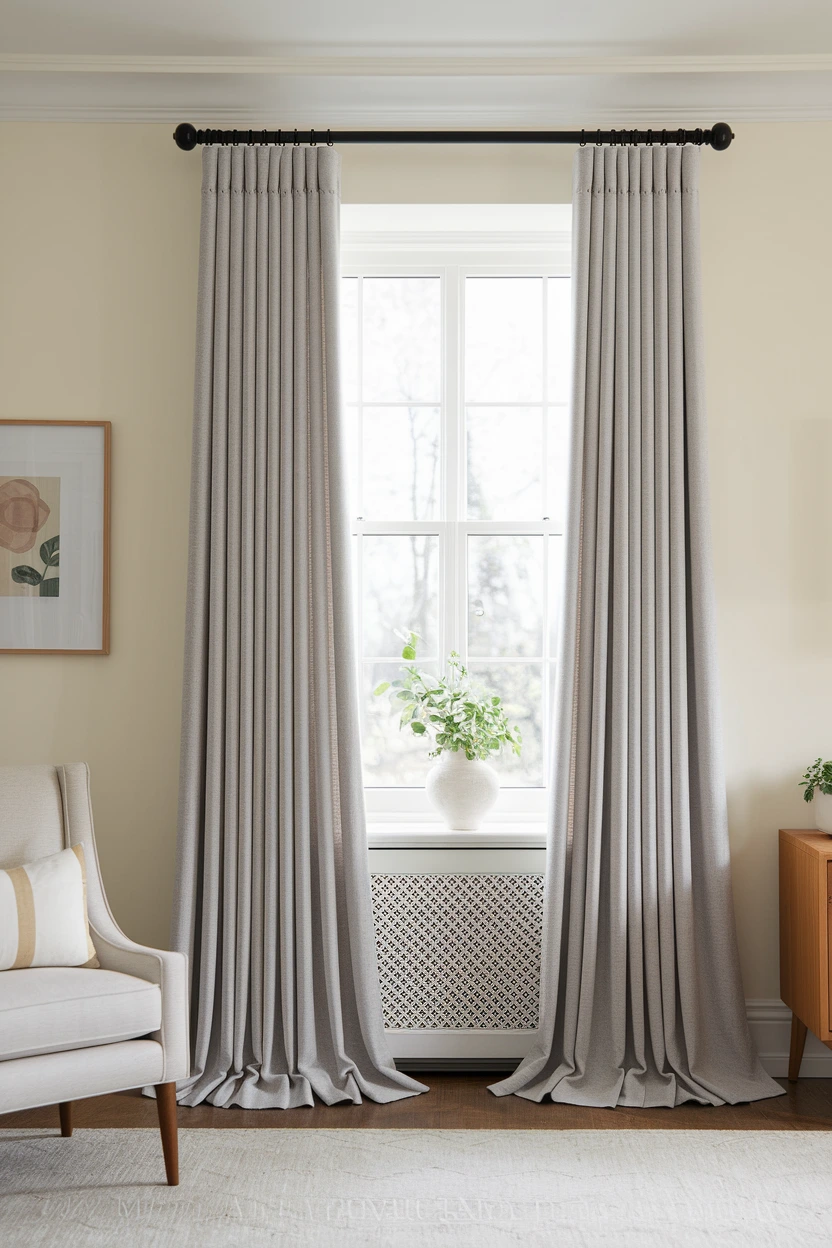
This is one of the few optical tricks that is consistent: rod 3–4 in below the ceiling (or at the crown), 8–12 in past the frame each side, panels to the floor. A rod plus two panels is $25–$90 (~PKR 7,000–25,000). Time: 1 hour. Sheer or wall-matched fabric keeps light. Heavy blackout puddled on the floor in a tiny room collects dust and looks accidental.
DIY. Common mistake: a rod clipped to the frame so the glass looks smaller. Spec: panel width at least 1.5–2× the span you cover; hem 1/2 in above the floor in high-traffic rooms. Cafe curtains on the lower half are a gimmick that chops the wall.
10. Select Slim, Well-Proportioned Furniture
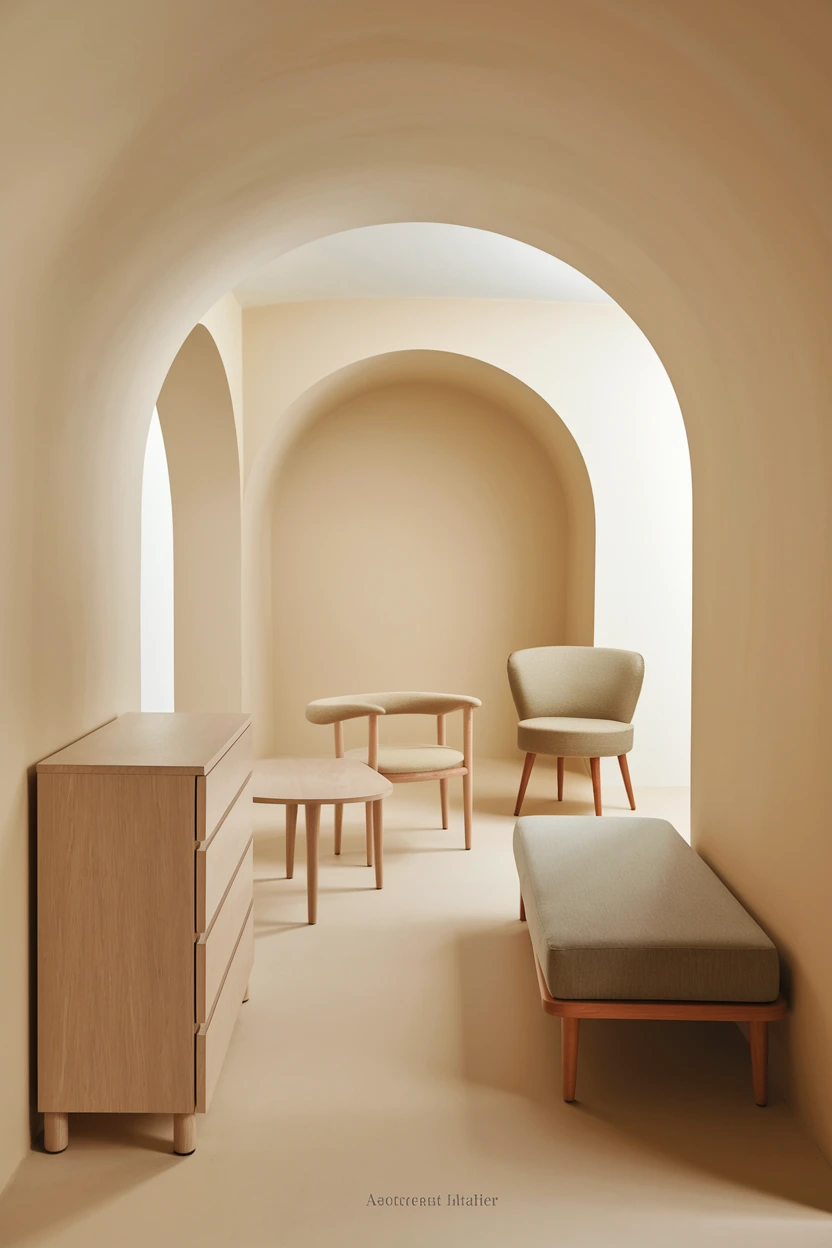
In 10×12 ft, a sofa over 78 in long usually blocks the door path. Look for 30–34 in depth, legs that show floor, and a dresser 14–16 in deep instead of 20 in. Cost varies; the cheap mistake is a $400 sofa that does not fit. Time: tape the footprint before delivery day.
DIY selection. Hire movers for anything over a doorway. Common mistake: “apartment size” labels without checking depth — many are still 36 in. Spec: 30–36 in walkway on the main path; nightstand 14–16 in wide. Open-leg furniture works. Lucite everything is optional; scale is not.
11. Create Depth With Layered Lighting
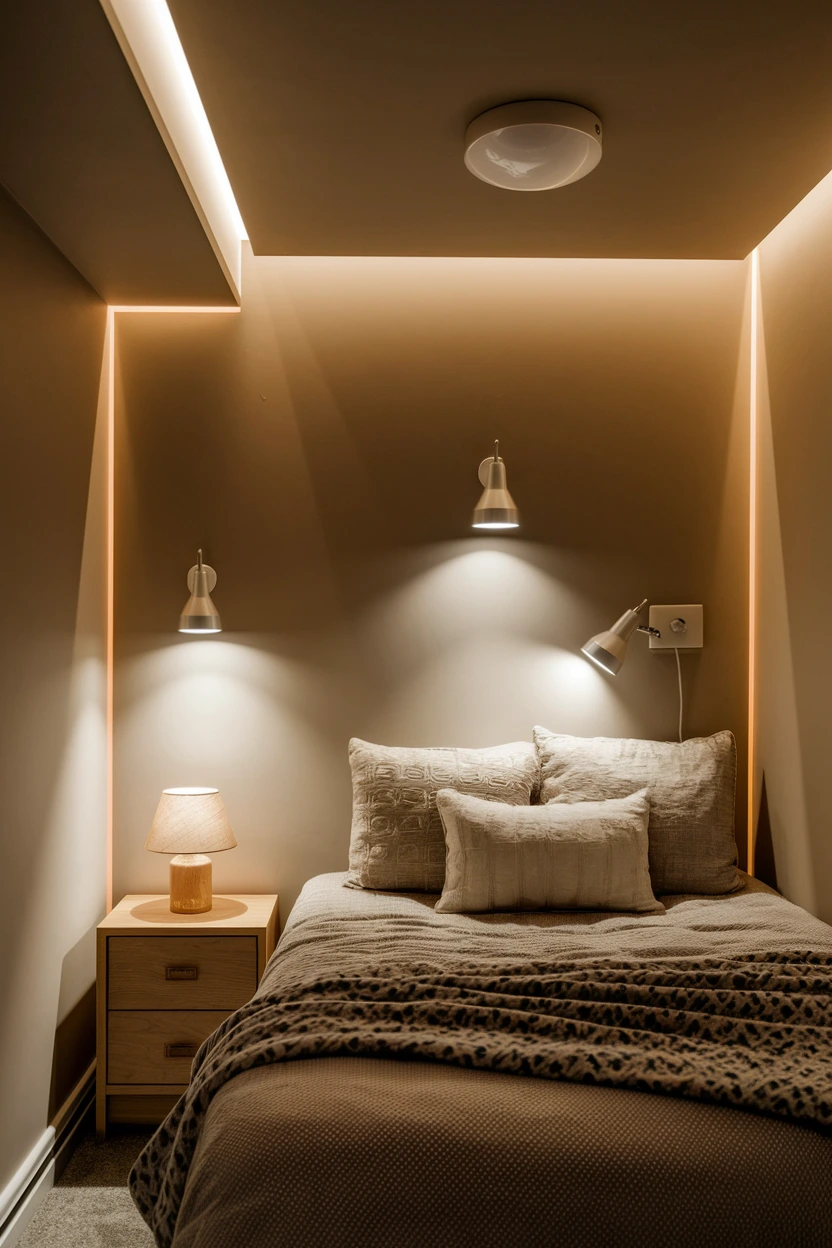
One overhead bulb flattens a small room. Add a 400–800 lumen table or wall lamp and a warmer dimmable ceiling. Lamps $20–$80 each (~PKR 5,600–22,000). Plug-in sconces $25–$70 avoid an electrician. Time: 1 hour. This works. RGB strips behind a bed as the only light is a gimmick and bad for reading.
DIY plug-in. Hire an electrician for new wall boxes ($150–$400). Common mistake: 5000K “daylight” in a bedroom that never relaxes. Spec: 2700–3000K for living/sleep; task lamp at the desk; total around 20–30 lumens/sq ft layered, not one 2,000-lumen glare bomb.
12. Try Clear or Open-Frame Furniture
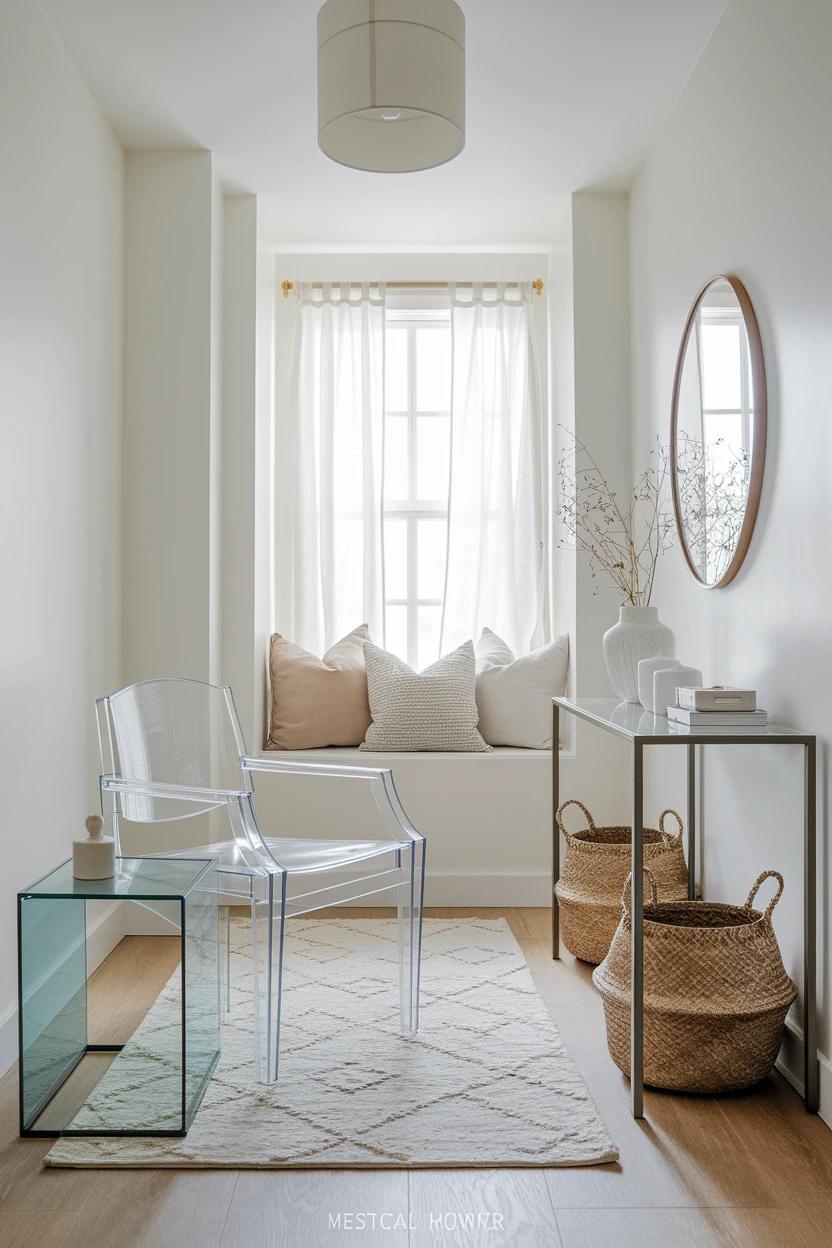
One acrylic chair or a glass nesting table lets you see floor through the object. Cost: $40–$150 (~PKR 11,000–42,000). Time: none. Use one or two pieces. A full set of acrylic dining chairs in a studio is noisy, scratch-prone, and still occupies the same cubic space as wood — the eye just works harder.
DIY. Common mistake: glass coffee table in a 24-in walkway you will shin. Spec: tempered glass; round corners in tight rooms; wipe-down weekly. Open metal frames work as well as acrylic and hide fingerprints better.
13. Divide the Room Into Clear Zones
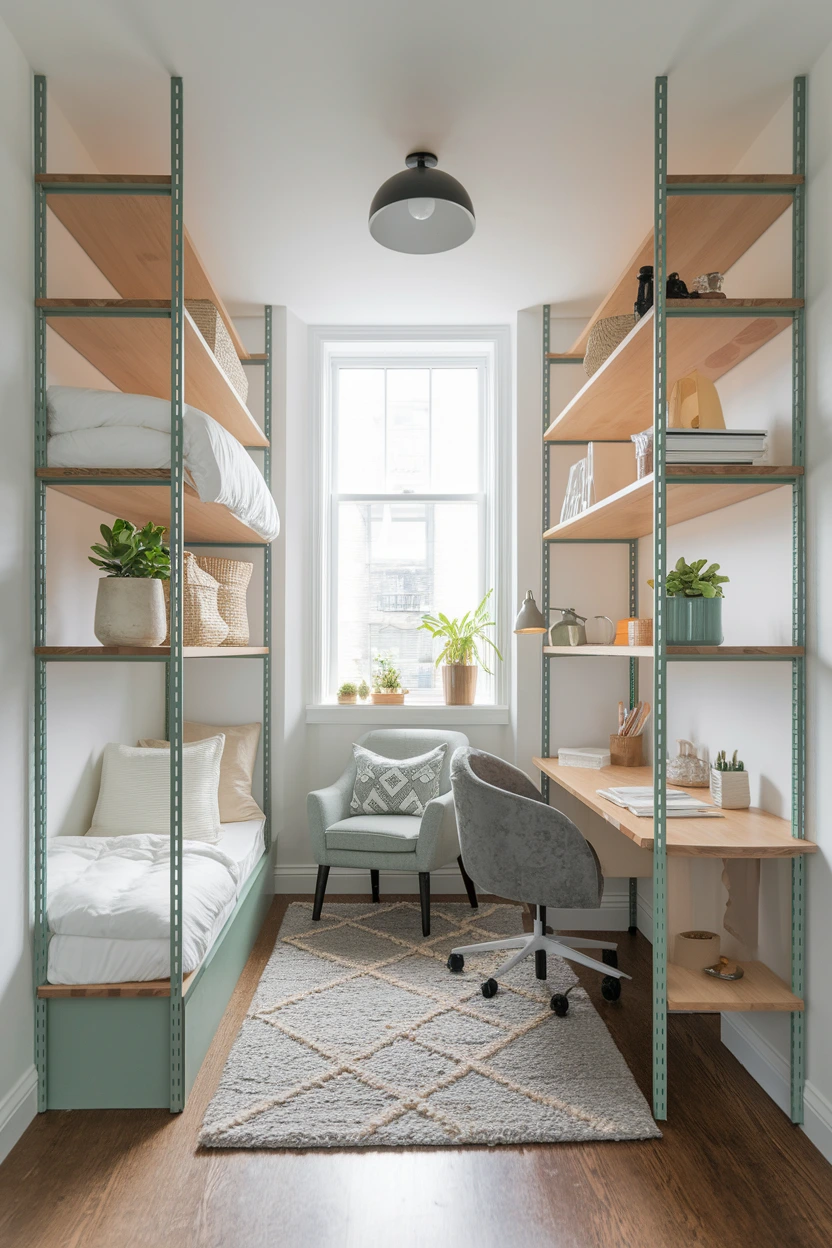
A 5×7 ft rug under the sitting piece and a different lamp at the desk is enough zoning. Rug $40–$180 (~PKR 11,000–50,000). Time: 20 minutes. This works. A folding screen behind the bed in a 9-ft-wide room usually steals light and 10 in of width — a gimmick unless you need privacy for a roommate.
DIY. Common mistake: a 8×10 rug in a 10×12 room that leaves a 6-in border and trips at the door. Spec: front legs of seating on the rug; 12–18 in of floor as a border if you can. Repeat one wood tone and one metal so zones still read as one room.
14. Declutter and Keep the Decor Cohesive
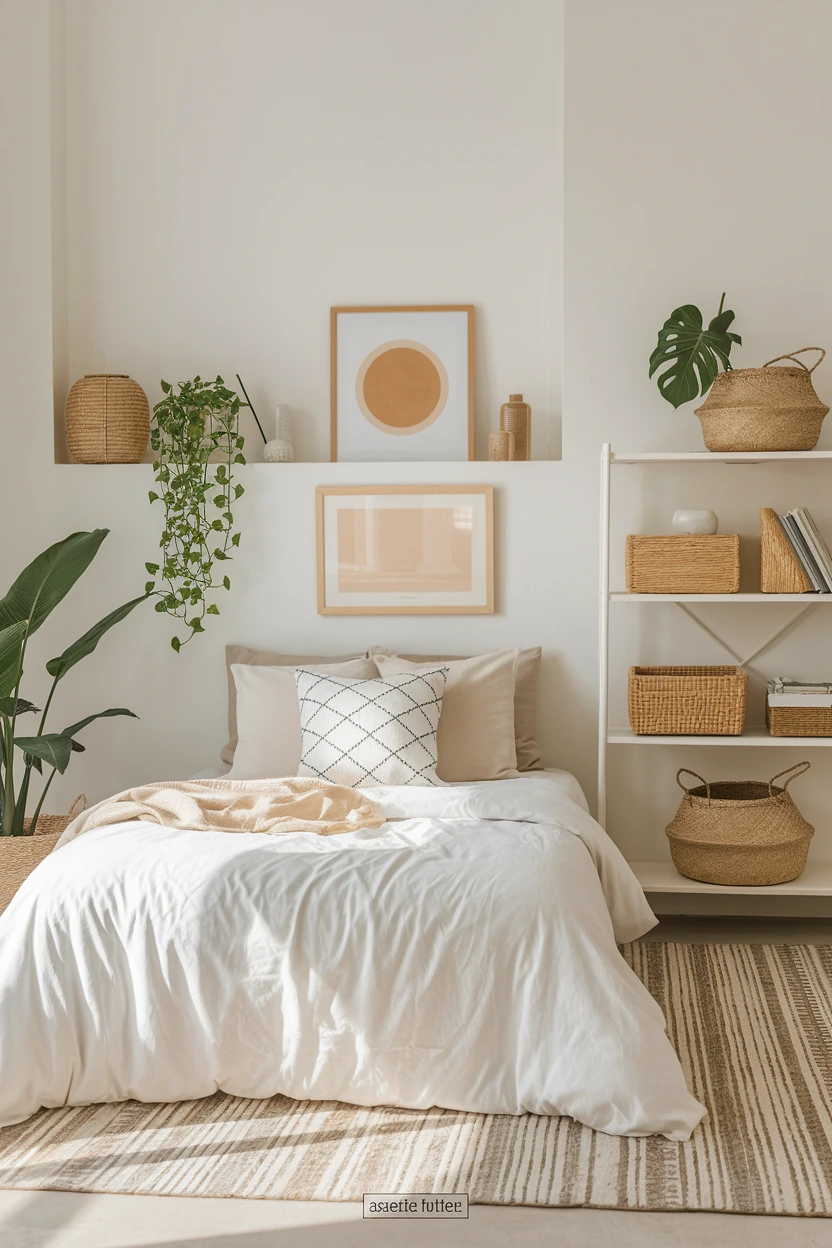
The cheapest square footage is stuff you remove. Boxes and a donation run cost $0–$30. Time: two 45-minute passes (clothes, then surfaces). One large print beats twelve small frames in a small room — that is editing, not a “gallery wall” gimmick.
DIY. Common mistake: decorative trays that become permanent clutter stages. Spec: every surface gets a job (keys, lamp, one book); vertical stacks of boxes in the closet beat a “pretty” open rack. If you cannot close the closet door, the room will never look bigger.
If you only do three things
- Tape furniture footprints and keep 30–36 in on the main path; return anything that fails.
- Hang curtains high and wide, and add one real task lamp — lighting changes perceived size more than throw pillows.
- Put storage in the bed and on the wall (anchored), then remove one piece of furniture you do not sit or sleep on.



Leave a Reply